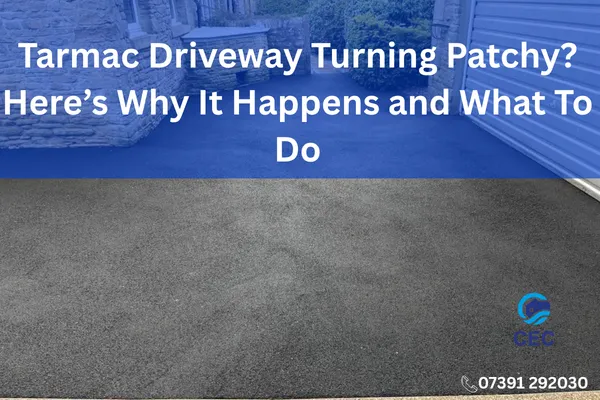
Tarmac Driveway Turning Patchy? Here’s Why It Happens and What To Do
You pull up outside your house, glance down at the driveway… and something just feels off.
The tarmac looks faded in places.
Darker in others.
A bit patchy. A bit tired.
It’s not falling apart. There are no huge holes. But it definitely doesn’t look like it used to.
If that sounds familiar, you’re not alone.
Patchy tarmac driveways are one of the most common issues homeowners across the UK face. And the good news is, it’s usually fixable without replacing the whole driveway.
Let’s look at why it happens and what you can do about it.
First Things First: Patchy Tarmac Is Normal
Tarmac (also called asphalt) is a tough, flexible surface. It’s designed to cope with vehicles, foot traffic and changing weather.
But it is not immune to wear.
Over time, exposure to the elements and everyday use slowly break down the surface layer. When that happens, the colour fades, texture changes, and patchiness starts to appear..
Common Reasons Tarmac Driveways Become Patchy
1. Sunlight and UV Exposure
The sun gradually oxidises the surface of tarmac.
This causes:
Fading from deep black to grey
Dry, brittle surface texture
Uneven colouring
South-facing driveways often show this first.
2. Water and Poor Drainage
Standing water is a big enemy of tarmac.
If water regularly sits on the surface or seeps into small cracks, it can:
Weaken the base
Wash out fine particles
Create darker patches
Over time, this leads to uneven appearance and soft spots.
3. Oil and Vehicle Fluid Stains
Small leaks from cars leave dark patches behind.
Oil breaks down the binder in tarmac, which weakens the surface and attracts more dirt.
This creates visible staining and contributes to patchiness.
4. General Wear and Tear
Tyres turning, foot traffic, bins being wheeled across the surface.
It all adds up.
High-use areas wear faster than quieter sections, which is why some parts of your driveway look worse than others.
5. Moss, Algae and Surface Contamination
Shaded or damp areas can develop light organic growth that darkens the surface and makes it look uneven.
Why Ignoring Patchy Tarmac Is a Bad Idea
At first, patchiness is mostly cosmetic.
But left untreated, it can lead to:
Cracking
Pitting
Water ingress
Surface crumbling
Costly repairs later
Think of patchiness as an early warning sign.
Catching it early is far cheaper than waiting until the surface fails.
What You Should Avoid
Many homeowners try quick fixes such as:
Jet washing aggressively
Painting with cheap bitumen products
Pouring random sealants
These can:
Make the surface look worse
Trap moisture
Create uneven colour
Shorten lifespan
Tarmac needs the right products and preparation.
The Proper Solution: Professional Tarmac Restoration
Professional tarmac restoration in Colchester focuses on reviving the existing surface, not ripping it out.
A typical restoration process includes:
Thorough cleaning
Moss and algae removal
Surface preparation
Repairs to minor damage
Application of specialist tarmac restorer or sealant
This re-bonds the surface, restores colour, and protects against further wear.
The result is a darker, richer finish that looks dramatically better and lasts longer.
Restoration vs Replacement
Replacement means digging up and installing a new driveway.
Restoration means improving what you already have.
If your base is still sound, restoration is:
Faster
Less disruptive
Far more affordable
Most patchy tarmac driveways are ideal candidates for restoration.
How Long Does Tarmac Restoration Last?
With correct application and basic maintenance:
Several years of improved appearance
Better resistance to weather and UV
Slower deterioration
Occasional cleaning and keeping drains clear helps extend lifespan even further.
When Is the Best Time to Restore Tarmac?
Milder, drier months are ideal.
Spring through early autumn usually offers the best conditions for curing and sealing.
However, if your driveway is already deteriorating, it’s better to address it sooner rather than waiting.
A Simple Rule of Thumb
If your tarmac:
Looks grey or faded
Has darker blotches
Feels rough
Has small cracks
It’s probably ready for restoration.
Final Thoughts
A patchy tarmac driveway doesn’t mean you need a brand-new driveway.
In most cases, it means your surface needs professional attention.
Colchester Exterior Cleaning provides professional tarmac restoration in Colchester and surrounding areas, restoring colour, improving durability and extending the life of your driveway.
If your tarmac is looking tired, get in touch today for a free quote and friendly advice.
A restored driveway can completely transform the front of your home.

