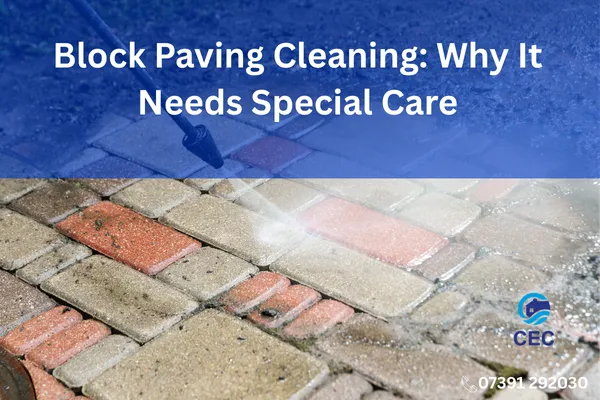
Block Paving Cleaning: Why It Needs Special Care
A little while ago, I spoke to a homeowner who had decided to “freshen up” their block-paved driveway with a pressure washer at the weekend.
At first, they were delighted.
The dirt disappeared.
The blocks looked brighter.
Instant satisfaction.
Then a few weeks later, they noticed weeds popping up everywhere.
Not long after that, some of the blocks started to feel loose underfoot.
What had gone wrong?
They hadn’t realised that block paving isn’t just about the surface. It’s a system. And that system needs a bit of care.
If you have block paving, this article will explain why it needs special treatment, what can go wrong, and how to look after it properly.
Block Paving Is More Than Just Blocks
Block paving is made up of:
Individual paving blocks
A compacted sub-base underneath
Kiln-dried sand brushed into the joints
That jointing sand is essential.
It:
Locks the blocks together
Helps distribute weight
Prevents movement
Discourages weed growth
When that sand is disturbed or removed, problems begin.
Why Block Paving Gets Dirty So Easily
Block paving is slightly porous and full of joints. That means:
Moisture sits in tiny gaps
Algae and moss grow easily
Dirt settles between blocks
Weeds find perfect conditions
Over time, the surface darkens and the joints start to look messy.
This is completely normal in the UK climate.
It does not mean your driveway is poor quality. It simply means it needs maintenance.
The Big Mistake: Using Too Much Pressure
Domestic pressure washers are powerful.
Used incorrectly, they can:
Blast out jointing sand
Chip block edges
Leave uneven striping
Drive water underneath blocks
Once the sand is removed, weeds return quickly and blocks can start to shift.
This is exactly what happened to the homeowner in the anecdote above.
They cleaned the surface, but unintentionally damaged the structure.
Why Block Paving Cleaning Needs a Process
Professional block paving cleaning is not just about blasting dirt away.
A proper process usually includes:
Pre-treatment if required
Controlled pressure washing
Thorough rinsing
Allowing the surface to dry
Re-sanding the joints
Optional biocide treatment
Each step matters.
Skipping re-sanding is one of the biggest reasons DIY results do not last.
What Is Re-Sanding and Why Is It Important?
After cleaning, much of the old jointing sand has been removed.
Re-sanding involves brushing fresh kiln-dried sand back into the joints once the driveway is dry.
This:
Locks blocks back into place
Improves stability
Reduces weed growth
Extends the life of the driveway
Without this step, the driveway may look clean but is left vulnerable.
The Role of Biocide Treatment
Even after cleaning, microscopic algae and spores can remain.
Biocide treatment:
Kills remaining spores
Slows down regrowth
Helps keep the surface cleaner for longer
It is especially useful for block paving in shaded areas or near trees.
Think of it as preventative maintenance rather than just cleaning.
How Often Should Block Paving Be Cleaned?
For most homes:
Once a year is ideal
Every 18 months at a minimum
If your driveway is heavily shaded, near trees or prone to weeds, annual cleaning is strongly recommended.
Regular light maintenance is easier and cheaper than heavy restoration every few years.
Signs Your Block Paving Needs Attention
Dark or black staining
Green patches
Weeds in joints
Loose or rocking blocks
Slippery surface
If you notice any of these, it is worth addressing sooner rather than later.
It’s Not Just About Looks
Yes, clean block paving looks great.
But proper cleaning also:
Improves safety
Protects the structure
Prevents movement
Extends lifespan
A well-maintained driveway can last for decades.
A neglected one can deteriorate surprisingly quickly.
A Simple Way to Think About It
Block paving is a bit like brickwork.
You would not jet wash a brick wall without thinking about the mortar.
The same principle applies to the sand between your blocks.
Final Thoughts
Block paving absolutely can be cleaned.
It just needs to be cleaned properly.
Professional driveway cleaning in Colchester takes the surface type into account, uses the correct pressure, re-sands joints where needed and can apply biocide treatment to help prevent regrowth.
If your block paving driveway is looking tired, patchy or full of weeds, now is a great time to sort it.
Get in touch with Colchester Exterior Cleaning today for a free quote and let us restore your block paving safely and professionally.
Once it’s done properly, you’ll wonder why you didn’t do it sooner.

