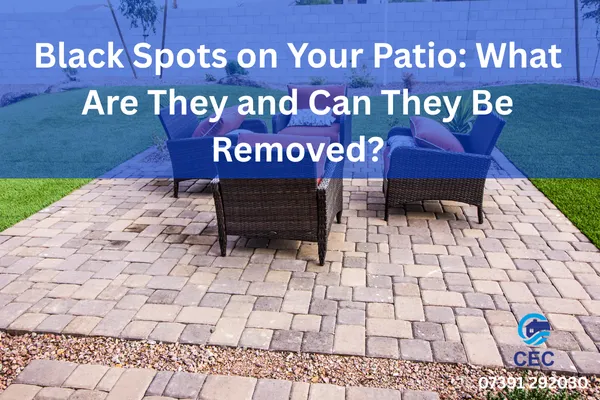
Black Spots on Patio Paving: Removal Advice for Colchester Homes
You clean the patio.
The dirt disappears.
The green coating goes.
The slabs look considerably brighter.
Then you stand back and see hundreds of little black marks still scattered across the paving.
You go over them again with the pressure washer.
They’re still there.
You move the nozzle closer.
Some refuse to move at all.
If this sounds familiar, there’s a good chance you’re dealing with one of the most frustrating problems we see on patios around Colchester: black spot lichen.
These marks can make an otherwise clean patio look dirty and tired. They can also be surprisingly difficult to remove once they’ve become established.
So what exactly are those black spots? Why are they so stubborn? Can they be removed completely? And should you keep attacking them with a pressure washer?
Here’s what Colchester homeowners need to know.
What Are the Black Spots on My Patio?
Those small, dark marks scattered across paving are often a form of lichen.
Lichen is a living organism created through a relationship between a fungus and an alga or cyanobacterium.
The Royal Horticultural Society explains that lichens commonly colonise paving, stone walls and other hard surfaces. They can form thin, flat crusts which gradually spread when conditions suit them.
On paving, some lichens appear as stubborn dark or almost black spots.
This is where the common name patio black spot comes from.
It isn’t simply dirt sitting on top of the slab.
That explains why your usual patio cleaning routine may hardly touch it.
Why Is Patio Black Spot So Difficult to Remove?
Ordinary dirt generally sits on or close to the surface.
Lichen becomes much more firmly attached.
Pavingexpert, a long-established UK paving reference, explains that crustose lichens can anchor themselves extremely tightly to the paving substrate. This is why brushing, scrubbing and even power washing can struggle to remove established colonies.
Think about the difference between mud sitting on a paving slab and something that has gradually established itself on the surface over several years.
Mud can often be rinsed away.
Established lichen takes considerably more work.
This is also why a patio can look beautifully clean immediately after pressure washing while those annoying black dots remain.
Is Every Black Mark on a Patio Lichen?
No.
There are several reasons paving can develop dark marks.
You could be looking at:
Lichen
Algae
Mould or other organic growth
Oil staining
Rust staining
Marks from plant pots or garden furniture
Organic staining from leaves or berries
Dirt trapped within a textured surface
Marks associated with the paving itself
The pattern often provides clues.
Black spot lichen commonly appears as lots of individual circular or irregular marks spread across the surface.
Oil tends to create larger stained patches.
Rust usually has a brown or orange colour.
Algae often produces a greener film across a wider area.
If you aren't sure what caused the marks, identifying the problem before treating it is sensible.
Using the wrong product can waste time and may damage the paving.
Why Does Black Spot Appear on Patios in Colchester?
Lichens occur naturally outdoors.
The RHS says lichens, algae, mosses and similar growths are common on hard surfaces, with damp conditions helping several types of growth establish themselves.
That makes patios an excellent place for them to settle.
Think about what your paving experiences throughout the year.
Rain.
Shade.
Fallen leaves.
Soil.
Plant material.
Water from pots.
Limited winter sunlight.
Months where parts of the patio barely dry properly.
Properties with shaded gardens can experience particularly noticeable organic growth.
If your patio sits beneath trees, behind a high fence or on a side of the house that receives relatively little direct sunlight, it may remain damp for longer after rainfall.
Those conditions can encourage growth across paving.
Does Black Spot Mean My Patio Is Damaged?
Usually, the presence of lichen itself doesn't mean your paving is ruined.
The RHS says lichens on hard surfaces aren't generally harmful to the material they're growing on.
They can still become a significant cosmetic problem.
A pale sandstone patio covered in hundreds of black marks can look dramatically older and dirtier than the same paving after appropriate cleaning.
Other organic growths can also create slippery surfaces, particularly when wet.
So homeowners generally want these growths removed for appearance, usability or both.
Which Patio Materials Get Black Spot?
Lichen can establish itself across many outdoor surfaces.
You may see it on:
Indian sandstone
Natural stone
Concrete slabs
Paths
Steps
Garden walls
Some block paving
Older paving
Natural stone patios are frequently associated with patio black spot because the marks can be particularly obvious against lighter colours.
Pavingexpert notes that lichen can colonise a range of paving materials, including concrete and natural stone, and highlights Indian sandstone as a surface where heavy colonisation can become very noticeable.
The exact cleaning approach should depend on the paving material.
That matters because a technique that works well on one surface could be unnecessarily harsh on another.
Why Didn't My Pressure Washer Remove the Black Spots?
This is one of the most common questions.
You pressure washed the patio.
The water coming off it was filthy.
The slabs changed colour.
The green disappeared.
Yet the black dots survived.
Your pressure washer isn't necessarily faulty.
Established lichen can simply be too firmly attached for water pressure alone to remove effectively.
Pavingexpert specifically notes that brushing, scrubbing and power washing can have limited effect on stubborn lichen.
That creates a temptation to increase the pressure.
Then increase it again.
Then hold the nozzle closer to the slab.
That’s where problems can start.
Can You Damage Paving Trying to Remove Black Spot?
Yes.
Trying to physically blast every black mark from the paving can cause more damage than the original problem.
The appearance of the lichen may tempt you to concentrate the pressure washer nozzle directly over individual marks.
If the paving surface starts eroding before the lichen releases, you haven’t cleaned the slab.
You’ve damaged it.
Pavingexpert warns against abrasive tools and excessively aggressive approaches because they may damage paving while still failing to eradicate the lichen completely.
Natural stone deserves particular care.
The aim is to clean the surface while protecting the paving underneath.
Should I Use a Wire Brush on Patio Black Spot?
Avoid aggressive metal brushing on delicate paving.
It sounds logical.
If the spot won't wash away, scrub it harder.
Unfortunately, highly abrasive tools can scratch or alter the surface.
Pavingexpert specifically warns against wire brushes and other abrasive methods for dealing with lichen on paving.
A suitable stiff-bristled outdoor brush can be useful for routine maintenance and loose growth.
That’s very different from grinding away at individual slabs.
If considerable physical force is needed to attack every spot, it’s worth reassessing the cleaning method.
Can Patio Black Spot Be Removed Professionally?
In many cases, yes.
The final result depends on several factors, including:
The paving material
How long the lichen has been established
How heavily the patio is affected
Previous treatments
The condition of the paving
How porous the surface is
Surrounding plants and landscaping
Professional patio cleaning can combine appropriate cleaning methods with specialist treatments where suitable.
Some patios respond extremely well.
Heavily established growth may require more work and realistic expectations.
If a patio has been covered for many years, expecting every single mark to vanish instantly may be unrealistic.
Improvement can still be dramatic.
Does Black Spot Removal Happen Immediately?
Sometimes the cleaning process needs time.
This is another difference between ordinary surface dirt and biological growth.
Homeowners often expect patio cleaning to work like washing a car.
Apply water.
Clean it.
Finished.
Biological treatments may need to act on the growth.
Very heavily affected paving can also require additional attention.
Pavingexpert notes that stubborn lichen sometimes requires repeated treatments to remove remaining traces.
A reputable exterior cleaner should explain what’s realistic before starting.
Can You Remove Black Spots From Indian Sandstone?
Indian sandstone is one of the surfaces where homeowners frequently notice black spot.
Its natural colour variations are part of its appeal.
Those same lighter shades can make dark lichen particularly obvious.
Cleaning sandstone requires care because it’s natural stone.
You want to remove the unwanted contamination while preserving the character and surface of the slabs.
This is where repeatedly concentrating a pressure washer on individual dots can become a poor strategy.
Professional cleaning allows the whole patio to be assessed first, including loose pointing, damaged slabs and heavily colonised areas.
Will Patio Black Spot Come Back?
It can.
Your patio lives outdoors.
Lichen spores and other organic material exist in the environment.
Cleaning doesn't place the patio inside a protective bubble.
The conditions around the patio still matter.
Shade, moisture, nearby trees and poor airflow can all contribute to organic growth returning over time.
The RHS recommends improving airflow, reducing excessive shade where practical and preventing standing water as ways of discouraging unwanted growth on hard surfaces.
That doesn't mean chopping down every tree surrounding your garden.
Simple maintenance can help.
Regular sweeping and preventing leaves from sitting wet on the paving for months are sensible habits.
Does Leaving Patio Furniture Out Make a Difference?
It can.
Move a garden table that's been in the same spot for months and you’ll often see a perfect outline underneath.
Furniture, pots and storage boxes can stop sunlight reaching the paving and restrict airflow.
Water can remain trapped underneath or around them.
Large plant pots can create particularly noticeable rings and staining.
Moving furniture and pots occasionally gives you the chance to sweep underneath and check what's developing.
It’s much easier to deal with early growth than something that has been establishing itself unnoticed for several years.
What About Areas Under Trees?
These are often the first parts of a patio to change colour.
Trees provide shade.
They drop leaves, blossom, berries and other organic material.
Rainwater takes longer to dry.
Bird activity may also be greater.
None of this means having trees near your patio is a problem.
It simply means those areas may need more regular maintenance.
Sweep away leaves.
Keep drains clear.
Move wet organic debris instead of allowing it to sit on the paving all winter.
A few minutes of maintenance can reduce the amount of material accumulating on the patio.
Should I Clean Black Spot as Soon as I See It?
You certainly don't need to panic when you see your first small black mark.
Lichen tends to develop gradually.
However, established colonies can spread across hard surfaces over time. The RHS notes that lichens can slowly colonise suitable surfaces.
If appearance matters to you, dealing with the problem before the patio becomes heavily covered can make sense.
This is particularly relevant with pale natural stone where black marks become very obvious.
The longer you leave a patio without any maintenance, the more work may eventually be required.
Is Spring a Good Time to Remove Patio Black Spot?
Spring is an excellent time to start looking at the patio.
Many homeowners around Colchester barely use their patio during the wettest part of winter.
Then March or April arrives.
The garden furniture comes back out.
The barbecue reappears.
You suddenly notice how much the paving has changed.
Getting a patio cleaned during spring means you can enjoy the result throughout the warmer part of the year.
There’s no rule saying patio cleaning must happen in spring, though.
The condition of the surface and suitable weather for the cleaning process matter more than a particular date on the calendar.
Should I Clean My Patio Before a Summer Party?
If your patio bothers you every time you look at it, cleaning it before you start entertaining outside can make a substantial visual difference.
You may have spent money on garden furniture, plants and lighting while the paving underneath has gradually become darker.
Cleaning the patio can change the appearance of the whole garden without replacing anything.
This is particularly noticeable when the paving has become so dirty that its original colour is barely visible.
Black spot removal can also help restore a cleaner, more consistent appearance.
What If I'm Selling My Colchester Home?
Then the patio becomes particularly worth looking at.
Buyers walking into the garden are imagining themselves using it.
A heavily stained patio covered in black spots can look like another maintenance job waiting for them.
Cleaning it may help the garden appear better cared for and ready to use.
If your estate agent is about to take photographs, arrange any significant patio cleaning before the photography where possible.
A large patio can feature prominently in garden photographs.
We've also created a separate guide explaining what to clean outside before selling your Colchester home, including driveways, patios, gutters, windows and exterior walls.
Can Black Spot Make a Patio Slippery?
Lichens themselves form part of a wider group of growths commonly found on outdoor hard surfaces.
The RHS says algae, lichens, liverworts and mosses can contribute to slippery patios, paths, drives, decking and steps.
Green algae is often the more obvious slippery coating.
If your patio is both black-spotted and green, you may be dealing with several types of organic growth at the same time.
Cleaning can therefore improve appearance while also dealing with slippery contamination.
Pay particular attention to steps and frequently used paths.
Is Household Bleach Suitable for Patio Black Spot?
You'll find plenty of online advice suggesting household cleaning products for patios.
Take care.
Cleaning chemicals can affect paving, plants, lawns, pets, drainage and surrounding materials.
Different paving surfaces also react differently.
Never mix cleaning chemicals.
Always follow the manufacturer's instructions for any product intended for outdoor paving.
If you're dealing with expensive natural stone or a large heavily affected patio, experimenting with strong chemicals can become an expensive way of discovering what your paving doesn't tolerate.
Professional cleaning also allows surrounding plants and surfaces to be considered as part of the job.
Can Vinegar Remove Black Spots From Paving?
Vinegar is another home remedy that appears regularly online.
Natural stone and acidic products can be a poor combination.
Some paving materials are sensitive to acids, which can alter or damage their appearance.
The fact that something lives in a kitchen cupboard doesn't automatically make it safe for every patio surface.
Identify the paving first.
Then choose a suitable cleaning method.
If you aren't certain what the patio is made from, getting advice first is much safer than testing increasingly strong household remedies.
What About Patio Black Spot Remover Products?
There are specialist patio cleaning and black spot products available.
Results vary according to the product, surface and severity of the problem.
Read the label carefully.
Check whether the product is suitable for your paving.
Pay attention to instructions concerning dilution, application, personal protective equipment, surrounding vegetation and rinsing.
A product labelled for one type of paving isn't automatically suitable for every stone surface.
Remember that stronger doesn't always mean better.
The goal is a clean patio that still has an undamaged surface when you've finished.
Could the Black Marks Be Coming From My Plant Pots?
Possibly.
Plant pots can create several types of marks.
Water drains through the compost and onto the paving.
Moisture remains trapped underneath the pot.
Metal containers may create rust staining.
Organic material accumulates around the base.
You may also discover algae or lichen thriving in the shaded area beneath it.
Move pots occasionally and inspect underneath them.
Pot feet can help lift containers slightly above the surface and improve drainage and airflow.
If you've got a collection of pots sitting in the same places year after year, those spots deserve a closer look.
Can You Prevent Patio Black Spot Completely?
Probably not.
Your patio is exposed to the natural environment all year.
The realistic aim is to make conditions less favourable and prevent heavy build-up.
Regular maintenance helps.
Sweep away leaves.
Move garden furniture occasionally.
Avoid allowing damp debris to sit on paving for months.
Keep drainage areas clear.
Cut back excessive overhanging growth where appropriate.
Improve airflow around permanently shaded areas if practical.
The RHS recommends regular brushing, reducing shade and improving airflow as ways of discouraging unwanted growth on hard surfaces.
This won't make your patio maintenance-free.
It can help stop a small problem quietly turning into a much bigger cleaning job.
Why Does One Part of My Patio Have More Black Spot Than Another?
Look at the conditions.
Is that section closer to trees?
Does the house shade it?
Does water collect there?
Is garden furniture covering it?
Does a fence block sunlight and airflow?
Two halves of the same patio can age very differently.
You might find relatively clean paving near the house and heavy growth further into a shaded corner.
Or the reverse.
This is useful information because it can help explain why the problem keeps returning in a particular area.
Should a Patio Be Sealed After Black Spot Removal?
This depends on the paving and the type of sealer being considered.
Sealing can be useful for some surfaces, although it isn't automatically necessary after every patio clean.
The paving needs to be suitable.
It also needs to be properly clean and sufficiently dry before an appropriate product is applied.
Applying a coating over remaining contamination or moisture can create new problems.
If you're considering sealing, ask for advice specific to your paving material and its condition.
Can Old Patio Slabs Still Be Restored?
Often, yes.
A patio doesn't need to be new to respond well to professional cleaning.
In fact, older paving can sometimes produce the most impressive visual transformations because homeowners have forgotten what colour it originally was.
The condition of the slabs still matters.
Cracks, failed pointing, movement and physical damage won't disappear through cleaning.
Cleaning may expose the true condition of the paving once years of dirt and organic growth have been removed.
That gives you a much clearer idea of whether any repairs are needed.
Patio Black Spot Around Colchester
We see a wide range of patio surfaces around Colchester and the surrounding areas.
Homes in Lexden, Stanway, Highwoods, Wivenhoe, West Bergholt and nearby villages can have everything from newer patios and block paving to older natural stone and established garden paths.
The surroundings matter as much as the location.
A shaded patio beneath mature trees may develop very differently from an open south-facing garden on a newer development.
That's why we look at the actual paving before deciding how it should be cleaned.
The material, condition and level of contamination all influence the approach.
When Is It Time to Call a Professional Patio Cleaner?
If you've given the patio a normal clean and the black spots barely change, you may have reached the point where professional treatment makes sense.
It's particularly worth asking for advice when:
Black spots cover a large proportion of the patio
Pressure washing has failed to remove them
You have natural stone paving
You're worried about damaging the slabs
The paving is heavily discoloured
The patio has become slippery
You're preparing the garden for summer
You're getting the property ready to sell
You simply want the patio looking good again
Send photographs if possible.
They can help us understand the type and scale of the problem before discussing the job.
Frequently Asked Questions About Patio Black Spot
What causes little black spots on patio slabs?
They are often caused by lichen that has colonised the paving. Lichens form tightly attached growths and can gradually spread across hard surfaces.
Will pressure washing remove patio black spot?
Pressure washing may remove some contamination, although established lichen can remain after ordinary pressure cleaning. Increasing pressure excessively can risk damaging the paving.
Can black spot be removed from Indian sandstone?
In many cases it can be significantly improved or removed using appropriate professional cleaning methods. The condition of the sandstone and severity of the growth need to be assessed first.
Why did my patio look clean except for hundreds of black dots?
General dirt and algae can be easier to remove than established lichen. Once surface dirt has gone, the remaining black spots can actually become more noticeable.
Does patio black spot damage paving?
Lichens themselves generally aren't considered harmful to hard surfaces, according to the RHS. Aggressive attempts to remove them can damage paving, so the cleaning method matters.
Will black spots come back after patio cleaning?
They can return over time because lichen occurs naturally outdoors. Keeping paving clear of wet debris, improving airflow and reducing persistent damp conditions can help discourage future growth.
How quickly can patio black spot be removed?
It depends on how heavily affected the paving is, the type of material and how long the growth has been established. Some areas respond quickly while stubborn colonies may require additional treatment.
Should I scrub black spots with a wire brush?
Aggressive abrasive tools can mark or damage some paving surfaces. Pavingexpert specifically cautions against wire brushes and other abrasive approaches for lichen removal.
Can you remove patio black spot without replacing the slabs?
Often, yes. Professional cleaning and suitable treatments can achieve a considerable improvement without replacing otherwise sound paving.
Does Colchester Exterior Cleaning remove patio black spot?
We can assess black spot, lichen and other staining on patios across Colchester and advise what cleaning approach is suitable for the paving involved.
Got Black Spots on Your Patio? Get a No-Obligation Quote
If you've pressure washed your patio and those stubborn black spots are still staring back at you, Colchester Exterior Cleaning can help.
We provide professional patio cleaning across Colchester and surrounding areas, including cleaning for patios affected by lichen, algae, dirt and other organic growth.
Send us a few photographs of the patio, tell us where you're based and roughly how large the area is. We can look at what you're dealing with, explain the most suitable cleaning option and provide a no-obligation quote.
Visit our Contact Us page today and request your no-obligation patio cleaning quote.

